
From Grow Bags to Acres: Kerala Farmers Revolutionizing Ginger Cultivation with Innovation and Sustainability
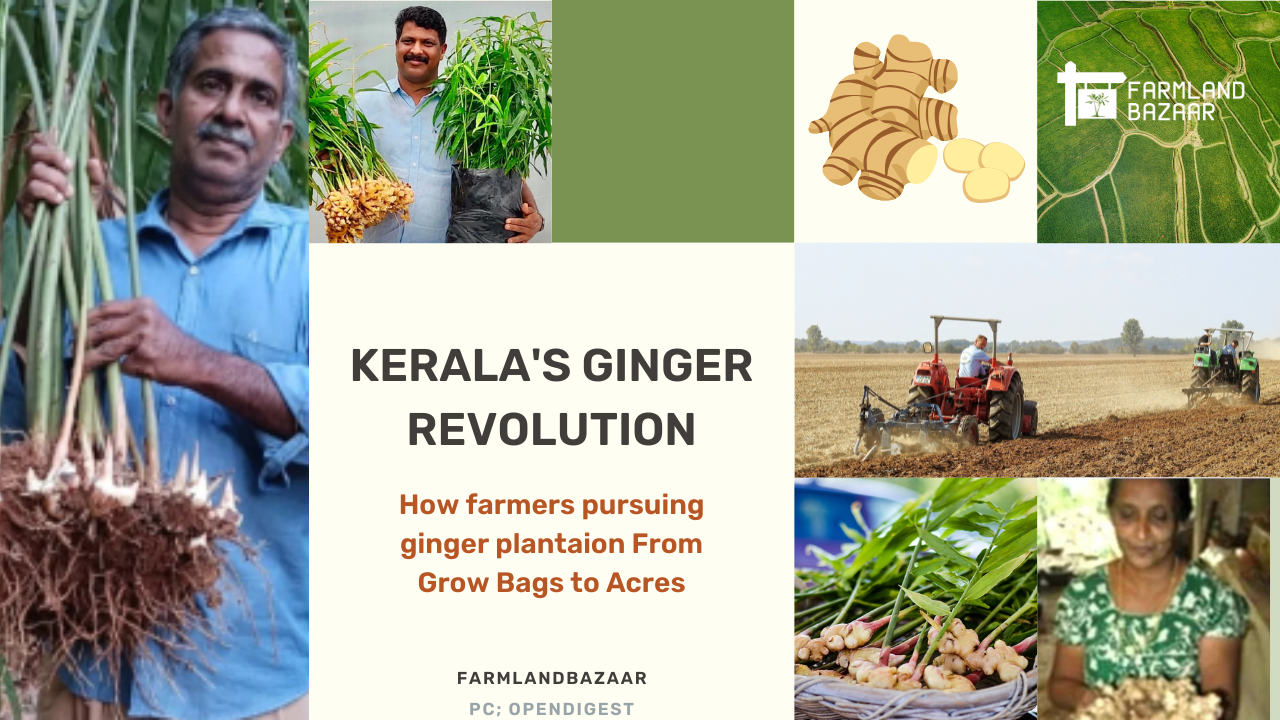
How much land is too much land to grow and earn profits? While many are still unsure whether investing in small plots is worthwhile or if they can even venture into farming, three farmers from Kerala are challenging this mindset. They are not only turning small spaces into profitable ginger farms but also combating the downturn in traditional farming by introducing innovative methods. Through techniques like grow bags and wild ginger farming, they’ve found sustainable, high-return solutions. Let’s learn from their stories and see how they’re bringing innovation to the farming world, even in the face of challenges.
1. Bineesh Dominic: From 7 Cents to Rs. 1 Lakh – A Grow Bag Revolution
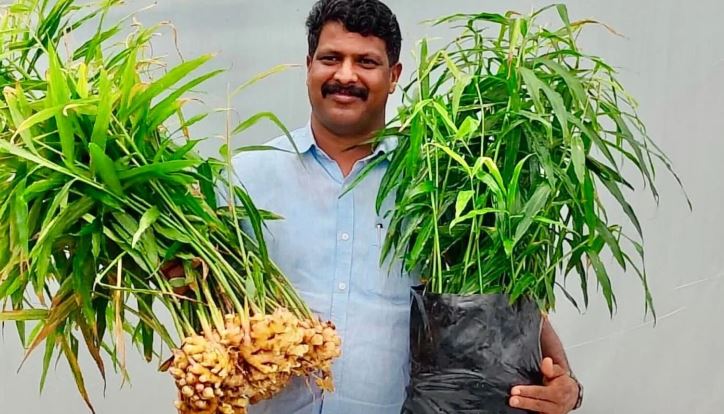 PC: OpenDigest
Bineesh Dominic, a 38-year-old farmer from Ambalavayal in Wayanad, Kerala, always looked for ways to overcome the rising costs and challenges of traditional farming. In an attempt to increase his ginger yield while minimizing costs, Bineesh turned to the innovative technique of growing ginger in grow bags. "I wanted to find a way to farm sustainably and increase the yield by reducing input costs. My years of experience in farming came in handy when I started the experiment," says Bineesh.
Starting with just 1,500 grow bags on seven cents of land, Bineesh created a controlled farming environment by filling the bags with a mixture of sand, cocopeat, and organic manure. In seven months, he achieved a yield of approximately 2 kg of ginger per bag, totaling 3,000 kg of ginger. His earnings from this harvest were an impressive Rs. 1 lakh.
Current Revenue & Expenditure:
-
Revenue: Rs. 1 lakh from 7 cents.
-
Expenditure: Rs. 50 per grow bag.
-
Projection: This season, Bineesh plans to scale up the use of grow bags to five acres, anticipating even higher yields.
"The grow bag method offers many advantages," Bineesh explains. "We drastically reduced the quantity of fertilizers used and saved costs on weed removal. Moreover, the ability to shift plants in case of pest attacks prevents widespread crop damage."
2. Omana Devasya: From Sacks to 400 Kg of Ginger – A "Ginger Woman's" Success
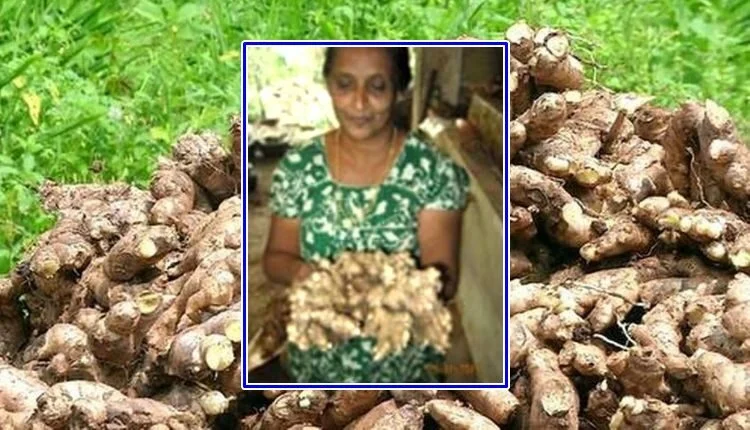
PC: KisanofIndia
Omana Devasya, a 51-year-old farmer from Peruvannamuzhi in Kozhikode, has been successfully growing ginger in sacks and grow bags for over eight years. Despite a brief pause in her farming activities, Omana is still actively sharing her knowledge with aspiring ginger farmers. She is affectionately known as the "ginger woman" in her community for her incredible success in cultivating ginger.
In her first few years of farming ginger in sacks, Omana achieved a harvest of 4-4.5 kg per bag, amounting to 400 kg of ginger. "It all started when I attended a training session at the Krishi Vigyan Kendras. The officers were surprised by the success of my farming method," Omana recalls.
Current Revenue & Expenditure:
-
Revenue: Approximately Rs. 50,000 to Rs. 60,000 per season from 400 kg of ginger.
-
Expenditure: Rs. 50 to Rs. 75 per bag for materials and labor.
-
Projection: Omana is working to increase the number of sacks and grow bags for the upcoming season, aiming for higher yields.
Omana’s method involves layering soil, sand, and organic fertilizers in large sacks, placing ginger seeds, and adding layers of dry leaves and coconut fiber for efficient drainage and moisture control. She believes that proper water management and the right timing are key to a successful ginger crop.
3. M.V. Radhakrishnan: How Wild Ginger Became a Financial Lifeline
PC: OpenDigest
M.V. Radhakrishnan, a 53-year-old farmer from Moolamattom in Idukki, was once a conventional rubber farmer. However, he faced financial instability due to fluctuating rubber prices. After researching alternative crops, Radhakrishnan discovered wild ginger, a native plant of the hilly regions of Kerala. Unlike hybrid crops, wild ginger doesn’t require expensive fertilizers and is naturally resistant to pests and diseases.
“I spoke with several old farmers who knew about wild ginger, and I learned that it could be grown without chemicals. Wild ginger's resistance to diseases was a major factor in my decision to switch,” says Radhakrishnan.
He started cultivating wild ginger on three acres of land four years ago and has now expanded to eight acres. His wild ginger is in high demand due to its medicinal properties and is bought by pharmaceutical companies both locally and across India. Radhakrishnan produces over three tonnes of wild ginger each season, selling it at Rs. 35-40 per kilogram for raw ginger and Rs. 130-140 per kilogram for dried ginger.
Current Revenue & Expenditure:
-
Revenue: Over Rs. 4 lakh annually from 8 acres of wild ginger.
-
Expenditure: Minimal, primarily cow dung and ash.
-
Projection: Radhakrishnan plans to expand his wild ginger farm by another 3 acres in the next two years to meet growing demand.
“Wild ginger is a low-maintenance crop. You don’t need to worry much after the initial planting,” he adds, emphasizing the crop's resilience and ease of cultivation.
Key Takeaways from These Stories:
-
Innovation in Small Spaces: Whether it's grow bags or sacks, these farmers have proven that small-scale, innovative farming methods can yield impressive returns, even on limited land.
-
Sustainability Matters: Each of these farmers emphasizes the importance of using organic and sustainable farming practices, which not only boost productivity but also help protect the environment.
-
Sharing Knowledge and Collaboration:The success of these farmers lies not only in their individual efforts but also in their dedication to uplifting the larger farming community. Their willingness to share knowledge and guide others has created a ripple effect of success. Take Omana Devasya, for instance—fondly known as the "Ginger Woman" in her locality. Her active involvement in helping others embrace ginger cultivation has made her a beacon of inspiration, proving that true growth comes from empowering those around you.
These three farmers from Kerala are proving that innovative farming methods can not only enhance productivity but also ensure financial security. Whether it’s growing ginger in grow bags or switching to wild ginger, each of them has found a path that leads to sustainability and profitability. By embracing new farming practices, these farmers have turned small spaces and limited resources into thriving businesses, setting a valuable example for others to follow.
Written by Farmland Bazaar Team
Agricultural assets advisor contributing to Farmland Bazaar v2. Focusing on organic investments, soil analysis reports, and deed checks.